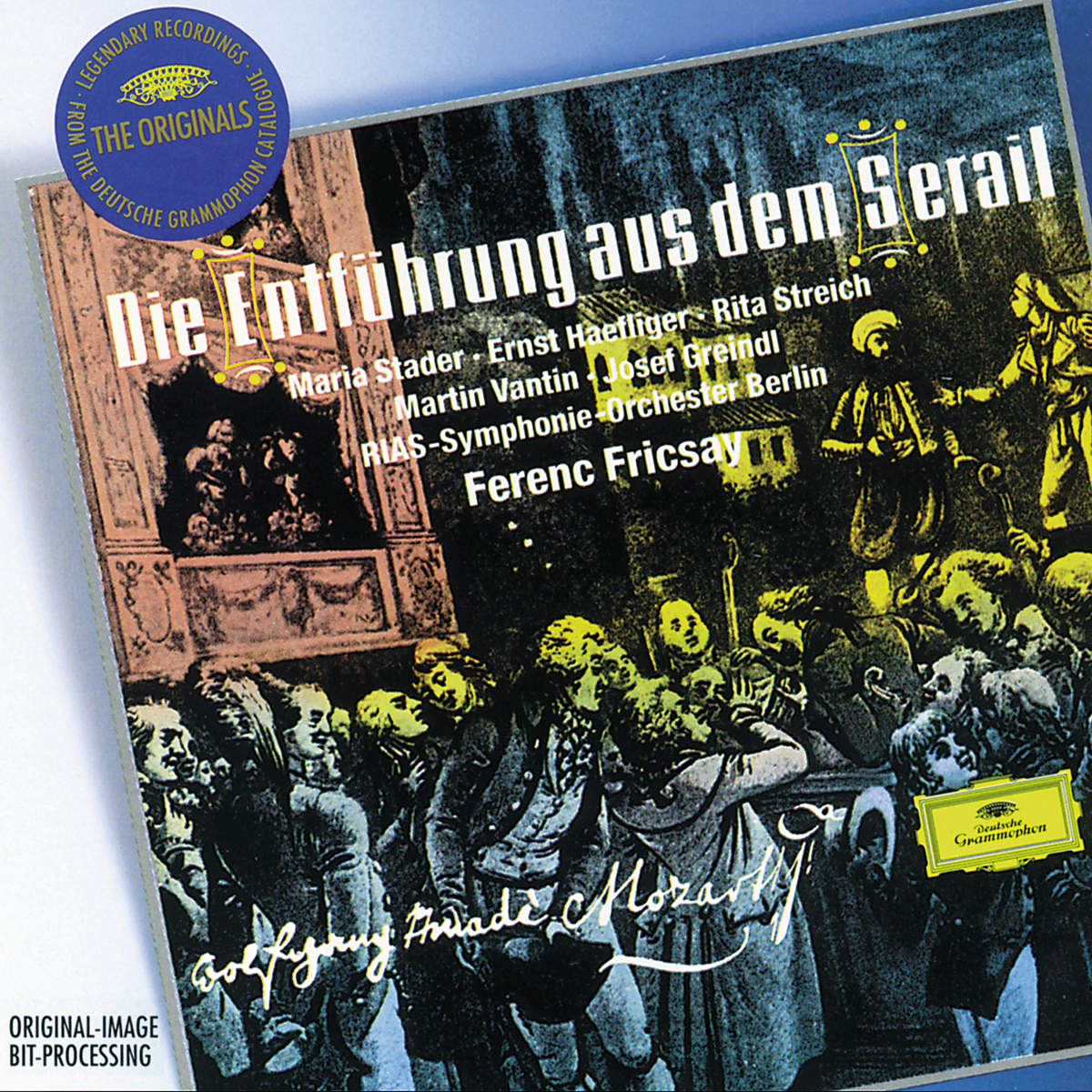
Tracklist

1Digital Media
2Digital Media
#TitleArtistRatingLength
1Die Entführung aus dem Serail, KV 384: Zweiter Akt. »Kein Bassa, keine Konstanze mehr da?« (Blonde, Pedrillo)
executive producer:
Prof. Elsa Schiller (Deutsche Grammophon's head of production 1952-1965)
producer:
Wolfgang Lohse
spoken vocals [Blonde]:
Rita Streich (soprano) (from 1954-05-16 until 1954-05-24)
spoken vocals [Pedrillo]:
Wolfgang Spier (actor, voice actor, dubbing artist) (from 1954-05-16 until 1954-05-24)
conductor:
Ferenc Fricsay (conductor) (from 1954-05-16 until 1954-05-24)
balance engineer:
Karlheinz Westphal (from 1954-05-16 until 1954-05-24)
phonographic copyright (℗) by:
Polydor International GmbH (not for release label use!) (in 1954)
recorded at:
Jesus‐Christus‐Kirche (Dahlem) in Berlin, Germany (from 1954-05-16 until 1954-05-24)
recording of:
Die Entführung aus dem Serail, K. 384: Akt II, Szene V. Dialog "Kein Bassa, keine Konstanze mehr da?" (Blonde, Pedrillo) (from 1954-05-16 until 1954-05-24)
composer:
Wolfgang Amadeus Mozart (classical composer)
additional librettist:
Johann Gottlieb Stephanie ('The Younger')
librettist:
Christoph Friedrich Bretzner
part of:
Die Entführung aus dem Serail, K. 384: Akt II
Wolfgang Amadeus Mozart0:45
2Die Entführung aus dem Serail, KV 384: Zweiter Akt, Nr. 12. Arie: »Welche Wonne, welche Lust« (Blonde)
executive producer:
Prof. Elsa Schiller (Deutsche Grammophon's head of production 1952-1965)
producer:
Wolfgang Lohse
soprano vocals [Blonde]:
Rita Streich (soprano) (from 1954-05-16 until 1954-05-24)
orchestra:
RIAS-Symphonie-Orchester Berlin (aka RIAS‐Symphonie‐Orchester, 1946–1956 / Radio‐Symphonie‐Orchester Berlin, 1956–1993) (from 1954-05-16 until 1954-05-24)
conductor:
Ferenc Fricsay (conductor) (from 1954-05-16 until 1954-05-24)
balance engineer:
Karlheinz Westphal (from 1954-05-16 until 1954-05-24)
phonographic copyright (℗) by:
Polydor International GmbH (not for release label use!) (in 1954)
recorded at:
Jesus‐Christus‐Kirche (Dahlem) in Berlin, Germany (from 1954-05-16 until 1954-05-24)
recording of:
Die Entführung aus dem Serail, K. 384: Akt II, Szene VI. No. 12 Arie "Welche Wonne, welche Lust" (Blonde) (from 1954-05-16 until 1954-05-24)
composer:
Wolfgang Amadeus Mozart (classical composer)
additional librettist:
Johann Gottlieb Stephanie ('The Younger')
librettist:
Christoph Friedrich Bretzner
part of:
Die Entführung aus dem Serail, K. 384: Akt II
Wolfgang Amadeus Mozart2:27
3Die Entführung aus dem Serail, KV 384: Zweiter Akt, Nr. 13. Arie: »Frisch zum Kampfe! Frisch zum Streite!« (Pedrillo)
executive producer:
Prof. Elsa Schiller (Deutsche Grammophon's head of production 1952-1965)
producer:
Wolfgang Lohse
tenor vocals [Pedrillo]:
Martin Vantin (tenor) (from 1954-05-16 until 1954-05-24)
orchestra:
RIAS-Symphonie-Orchester Berlin (aka RIAS‐Symphonie‐Orchester, 1946–1956 / Radio‐Symphonie‐Orchester Berlin, 1956–1993) (from 1954-05-16 until 1954-05-24)
conductor:
Ferenc Fricsay (conductor) (from 1954-05-16 until 1954-05-24)
balance engineer:
Karlheinz Westphal (from 1954-05-16 until 1954-05-24)
phonographic copyright (℗) by:
Polydor International GmbH (not for release label use!) (in 1954)
recorded at:
Jesus‐Christus‐Kirche (Dahlem) in Berlin, Germany (from 1954-05-16 until 1954-05-24)
recording of:
Die Entführung aus dem Serail, K. 384: Akt II, Szene VII. No. 13 Arie "Frisch zum Kampfe!" (Pedrillo) (from 1954-05-16 until 1954-05-24)
composer:
Wolfgang Amadeus Mozart (classical composer)
additional librettist:
Johann Gottlieb Stephanie ('The Younger')
librettist:
Christoph Friedrich Bretzner
part of:
Die Entführung aus dem Serail, K. 384: Akt II
Wolfgang Amadeus Mozart2:46
4Die Entführung aus dem Serail, KV 384: Zweiter Akt. »Hm, Geht's hier so lustig zu?« (Osmin, Pedrillo)
executive producer:
Prof. Elsa Schiller (Deutsche Grammophon's head of production 1952-1965)
producer:
Wolfgang Lohse
spoken vocals [Osmin]:
Josef Greindl (operatic bass) (from 1954-05-16 until 1954-05-24)
spoken vocals [Pedrillo]:
Wolfgang Spier (actor, voice actor, dubbing artist) (from 1954-05-16 until 1954-05-24)
conductor:
Ferenc Fricsay (conductor) (from 1954-05-16 until 1954-05-24)
balance engineer:
Karlheinz Westphal (from 1954-05-16 until 1954-05-24)
phonographic copyright (℗) by:
Polydor International GmbH (not for release label use!) (in 1954)
recorded at:
Jesus‐Christus‐Kirche (Dahlem) in Berlin, Germany (from 1954-05-16 until 1954-05-24)
recording of:
Die Entführung aus dem Serail, K. 384: Akt II, Szene VIII. Dialog "Ha! Geht's hier so lustig zu?" (Osmin, Pedrillo) (from 1954-05-16 until 1954-05-24)
composer:
Wolfgang Amadeus Mozart (classical composer)
additional librettist:
Johann Gottlieb Stephanie ('The Younger')
librettist:
Christoph Friedrich Bretzner
part of:
Die Entführung aus dem Serail, K. 384: Akt II
Wolfgang Amadeus Mozart0:57
5Die Entführung aus dem Serail, KV 384: Zweiter Akt, Nr. 14. Duett: »Vivat Bacchus! Bacchus lebe!« (Osmin, Pedrillo)
executive producer:
Prof. Elsa Schiller (Deutsche Grammophon's head of production 1952-1965)
producer:
Wolfgang Lohse
bass vocals [Osmin]:
Josef Greindl (operatic bass) (from 1954-05-16 until 1954-05-24)
tenor vocals [Pedrillo]:
Martin Vantin (tenor) (from 1954-05-16 until 1954-05-24)
orchestra:
RIAS-Symphonie-Orchester Berlin (aka RIAS‐Symphonie‐Orchester, 1946–1956 / Radio‐Symphonie‐Orchester Berlin, 1956–1993) (from 1954-05-16 until 1954-05-24)
conductor:
Ferenc Fricsay (conductor) (from 1954-05-16 until 1954-05-24)
balance engineer:
Karlheinz Westphal (from 1954-05-16 until 1954-05-24)
phonographic copyright (℗) by:
Polydor International GmbH (not for release label use!) (in 1954)
recorded at:
Jesus‐Christus‐Kirche (Dahlem) in Berlin, Germany (from 1954-05-16 until 1954-05-24)
recording of:
Die Entführung aus dem Serail, K. 384: Akt II, Szene VIII. No. 14 Duett "Vivat Bacchus! Bacchus lebe!" (Pedrillo, Osmin) (from 1954-05-16 until 1954-05-24)
composer:
Wolfgang Amadeus Mozart (classical composer)
additional librettist:
Johann Gottlieb Stephanie ('The Younger')
librettist:
Christoph Friedrich Bretzner
part of:
Die Entführung aus dem Serail, K. 384: Akt II
Wolfgang Amadeus Mozart1:59
6Die Entführung aus dem Serail, KV 384: Zweiter Akt. »Hm, das ist ein Wein« (Osmin, Pedrillo, Belmonte)
executive producer:
Prof. Elsa Schiller (Deutsche Grammophon's head of production 1952-1965)
producer:
Wolfgang Lohse
spoken vocals [Belmonte]:
Sebastian Fischer (actor, voice actor and dubbing speaker) (from 1954-05-16 until 1954-05-24)
spoken vocals [Osmin]:
Josef Greindl (operatic bass) (from 1954-05-16 until 1954-05-24)
spoken vocals [Pedrillo]:
Wolfgang Spier (actor, voice actor, dubbing artist) (from 1954-05-16 until 1954-05-24)
conductor:
Ferenc Fricsay (conductor) (from 1954-05-16 until 1954-05-24)
balance engineer:
Karlheinz Westphal (from 1954-05-16 until 1954-05-24)
phonographic copyright (℗) by:
Polydor International GmbH (not for release label use!) (in 1954)
recorded at:
Jesus‐Christus‐Kirche (Dahlem) in Berlin, Germany (from 1954-05-16 until 1954-05-24)
recording of:
Die Entführung aus dem Serail, K. 384: Akt II, Szene VIII. Dialog "Wahrhaftig, das muß ich gestehen" (Pedrillo, Osmin) (from 1954-05-16 until 1954-05-24)
composer:
Wolfgang Amadeus Mozart (classical composer)
additional librettist:
Johann Gottlieb Stephanie ('The Younger')
librettist:
Christoph Friedrich Bretzner
part of:
Die Entführung aus dem Serail, K. 384: Akt II
Wolfgang Amadeus Mozart0:34
7Die Entführung aus dem Serail, KV 384: Zweiter Akt, Nr. 15. Arie: »Wenn der Freude Tränen fließen« (Belmonte)
executive producer:
Prof. Elsa Schiller (Deutsche Grammophon's head of production 1952-1965)
producer:
Wolfgang Lohse
tenor vocals [Belmonte]:
Ernst Haefliger (tenor) (from 1954-05-16 until 1954-05-24)
orchestra:
RIAS-Symphonie-Orchester Berlin (aka RIAS‐Symphonie‐Orchester, 1946–1956 / Radio‐Symphonie‐Orchester Berlin, 1956–1993) (from 1954-05-16 until 1954-05-24)
conductor:
Ferenc Fricsay (conductor) (from 1954-05-16 until 1954-05-24)
balance engineer:
Karlheinz Westphal (from 1954-05-16 until 1954-05-24)
phonographic copyright (℗) by:
Polydor International GmbH (not for release label use!) (in 1954)
recorded at:
Jesus‐Christus‐Kirche (Dahlem) in Berlin, Germany (from 1954-05-16 until 1954-05-24)
recording of:
Die Entführung aus dem Serail, K. 384: Akt II, Szene IX. No. 15 Arie "Wenn der Freude Tränen fließen" (Belmonte) (from 1954-05-16 until 1954-05-24)
composer:
Wolfgang Amadeus Mozart (classical composer)
additional librettist:
Johann Gottlieb Stephanie ('The Younger')
librettist:
Christoph Friedrich Bretzner
part of:
Die Entführung aus dem Serail, K. 384: Akt II
Wolfgang Amadeus Mozart4:33
8Die Entführung aus dem Serail, KV 384: Zweiter Akt, Nr. 16. Quartett: »Ach Belmonte! Ach, mein Leben!« (Konstanze, Belmonte, Pedrillo, Blonde)
executive producer:
Prof. Elsa Schiller (Deutsche Grammophon's head of production 1952-1965)
producer:
Wolfgang Lohse
soprano vocals [Blonde]:
Rita Streich (soprano) (from 1954-05-16 until 1954-05-24)
soprano vocals [Konstanze]:
Maria Stader (soprano) (from 1954-05-16 until 1954-05-24)
tenor vocals [Belmonte]:
Ernst Haefliger (tenor) (from 1954-05-16 until 1954-05-24)
tenor vocals [Pedrillo]:
Martin Vantin (tenor) (from 1954-05-16 until 1954-05-24)
orchestra:
RIAS-Symphonie-Orchester Berlin (aka RIAS‐Symphonie‐Orchester, 1946–1956 / Radio‐Symphonie‐Orchester Berlin, 1956–1993) (from 1954-05-16 until 1954-05-24)
conductor:
Ferenc Fricsay (conductor) (from 1954-05-16 until 1954-05-24)
balance engineer:
Karlheinz Westphal (from 1954-05-16 until 1954-05-24)
phonographic copyright (℗) by:
Polydor International GmbH (not for release label use!) (in 1954)
recorded at:
Jesus‐Christus‐Kirche (Dahlem) in Berlin, Germany (from 1954-05-16 until 1954-05-24)
recording of:
Die Entführung aus dem Serail, K. 384: Akt II, Szene IX. No. 16 Quartett "Ach Belmonte! Ach mein Leben!" (Konstanze, Belmonte, Pedrillo, Blonde) (from 1954-05-16 until 1954-05-24)
composer:
Wolfgang Amadeus Mozart (classical composer)
additional librettist:
Johann Gottlieb Stephanie ('The Younger')
librettist:
Christoph Friedrich Bretzner
part of:
Die Entführung aus dem Serail, K. 384: Akt II
Wolfgang Amadeus Mozart9:23
9Die Entführung aus dem Serail, KV 384: Dritter Akt. »So, nun aber schnell, Blondchen« (Pedrillo, Blonde)
executive producer:
Prof. Elsa Schiller (Deutsche Grammophon's head of production 1952-1965)
producer:
Wolfgang Lohse
spoken vocals [Blonde]:
Rita Streich (soprano) (from 1954-05-16 until 1954-05-24)
spoken vocals [Pedrillo]:
Wolfgang Spier (actor, voice actor, dubbing artist) (from 1954-05-16 until 1954-05-24)
conductor:
Ferenc Fricsay (conductor) (from 1954-05-16 until 1954-05-24)
balance engineer:
Karlheinz Westphal (from 1954-05-16 until 1954-05-24)
phonographic copyright (℗) by:
Polydor International GmbH (not for release label use!) (in 1954)
recorded at:
Jesus‐Christus‐Kirche (Dahlem) in Berlin, Germany (from 1954-05-16 until 1954-05-24)
recording of:
Die Entführung aus dem Serail, K. 384: Akt III, Szene I. Dialog "Hier, lieber Klaas" (Pedrillo, Klaas) / Akt III, Szene II. Dialog "Ach! — Ich muß Atem holen" (Pedrillo, Belmonte) / Akt III, Szene III. Dialog "O Konstanze, Konstanze! Wie schlägt mir das Herz!" (Belmonte) (from 1954-05-16 until 1954-05-24)
composer:
Wolfgang Amadeus Mozart (classical composer)
additional librettist:
Johann Gottlieb Stephanie ('The Younger')
librettist:
Christoph Friedrich Bretzner
part of:
Die Entführung aus dem Serail, K. 384: Akt III
Wolfgang Amadeus Mozart0:24
10Die Entführung aus dem Serail, KV 384: Dritter Akt, Nr. 17. Arie: »Ich baue ganz auf deine Stärke« (Belmonte)
executive producer:
Prof. Elsa Schiller (Deutsche Grammophon's head of production 1952-1965)
producer:
Wolfgang Lohse
tenor vocals [Belmonte]:
Ernst Haefliger (tenor) (from 1954-05-16 until 1954-05-24)
orchestra:
RIAS-Symphonie-Orchester Berlin (aka RIAS‐Symphonie‐Orchester, 1946–1956 / Radio‐Symphonie‐Orchester Berlin, 1956–1993) (from 1954-05-16 until 1954-05-24)
conductor:
Ferenc Fricsay (conductor) (from 1954-05-16 until 1954-05-24)
balance engineer:
Karlheinz Westphal (from 1954-05-16 until 1954-05-24)
phonographic copyright (℗) by:
Polydor International GmbH (not for release label use!) (in 1954)
recorded at:
Jesus‐Christus‐Kirche (Dahlem) in Berlin, Germany (from 1954-05-16 until 1954-05-24)
recording of:
Die Entführung aus dem Serail, K. 384: Akt III, Szene III. No. 17 Aria "Ich baue ganz auf deine Stärke" (Belmonte) (from 1954-05-16 until 1954-05-24)
composer:
Wolfgang Amadeus Mozart (classical composer)
additional librettist:
Johann Gottlieb Stephanie ('The Younger')
librettist:
Christoph Friedrich Bretzner
part of:
Die Entführung aus dem Serail, K. 384: Akt III
Wolfgang Amadeus Mozart3:51
11Die Entführung aus dem Serail, KV 384: Dritter Akt. »So, gnädiger Herr, jetzt schnell« - »Im Mohrenland gefangen war« (Pedrillo, Belmonte)
executive producer:
Prof. Elsa Schiller (Deutsche Grammophon's head of production 1952-1965)
producer:
Wolfgang Lohse
spoken vocals [Belmonte]:
Sebastian Fischer (actor, voice actor and dubbing speaker) (from 1954-05-16 until 1954-05-24)
spoken vocals [Pedrillo]:
Wolfgang Spier (actor, voice actor, dubbing artist) (from 1954-05-16 until 1954-05-24)
tenor vocals [Belmonte]:
Ernst Haefliger (tenor) (from 1954-05-16 until 1954-05-24)
tenor vocals [Pedrillo]:
Martin Vantin (tenor) (from 1954-05-16 until 1954-05-24)
orchestra:
RIAS-Symphonie-Orchester Berlin (aka RIAS‐Symphonie‐Orchester, 1946–1956 / Radio‐Symphonie‐Orchester Berlin, 1956–1993) (from 1954-05-16 until 1954-05-24)
conductor:
Ferenc Fricsay (conductor) (from 1954-05-16 until 1954-05-24)
balance engineer:
Karlheinz Westphal (from 1954-05-16 until 1954-05-24)
phonographic copyright (℗) by:
Polydor International GmbH (not for release label use!) (in 1954)
recorded at:
Jesus‐Christus‐Kirche (Dahlem) in Berlin, Germany (from 1954-05-16 until 1954-05-24)
recording of:
Die Entführung aus dem Serail, K. 384: Akt III, Szene IV. No. 18 Romanze "In Mohrenland gefangen war" (Pedrillo, Belmonte) (from 1954-05-16 until 1954-05-24)
composer:
Wolfgang Amadeus Mozart (classical composer)
additional librettist:
Johann Gottlieb Stephanie ('The Younger')
librettist:
Christoph Friedrich Bretzner
part of:
Die Entführung aus dem Serail, K. 384: Akt III
Wolfgang Amadeus Mozart2:25
12Die Entführung aus dem Serail, KV 384: Dritter Akt. »Das Fenster geht auf, Herr!« (Pedrillo, Konstanze, Blonde, Osmin)
executive producer:
Prof. Elsa Schiller (Deutsche Grammophon's head of production 1952-1965)
producer:
Wolfgang Lohse
spoken vocals [Blonde]:
Rita Streich (soprano) (from 1954-05-16 until 1954-05-24)
spoken vocals [Konstanze]:
Beate Guttmann (from 1954-05-16 until 1954-05-24)
spoken vocals [Osmin]:
Josef Greindl (operatic bass) (from 1954-05-16 until 1954-05-24)
spoken vocals [Pedrillo]:
Wolfgang Spier (actor, voice actor, dubbing artist) (from 1954-05-16 until 1954-05-24)
conductor:
Ferenc Fricsay (conductor) (from 1954-05-16 until 1954-05-24)
balance engineer:
Karlheinz Westphal (from 1954-05-16 until 1954-05-24)
phonographic copyright (℗) by:
Polydor International GmbH (not for release label use!) (in 1954)
recorded at:
Jesus‐Christus‐Kirche (Dahlem) in Berlin, Germany (from 1954-05-16 until 1954-05-24)
Wolfgang Amadeus Mozart0:44
13Die Entführung aus dem Serail, KV 384: Dritter Akt, Nr. 19. Arie: »Ha, wie will ich triumphieren« (Osmin)
executive producer:
Prof. Elsa Schiller (Deutsche Grammophon's head of production 1952-1965)
producer:
Wolfgang Lohse
bass vocals [Osmin]:
Josef Greindl (operatic bass) (from 1954-05-16 until 1954-05-24)
orchestra:
RIAS-Symphonie-Orchester Berlin (aka RIAS‐Symphonie‐Orchester, 1946–1956 / Radio‐Symphonie‐Orchester Berlin, 1956–1993) (from 1954-05-16 until 1954-05-24)
conductor:
Ferenc Fricsay (conductor) (from 1954-05-16 until 1954-05-24)
balance engineer:
Karlheinz Westphal (from 1954-05-16 until 1954-05-24)
phonographic copyright (℗) by:
Polydor International GmbH (not for release label use!) (in 1954)
recorded at:
Jesus‐Christus‐Kirche (Dahlem) in Berlin, Germany (from 1954-05-16 until 1954-05-24)
recording of:
Die Entführung aus dem Serail, K. 384: Akt III, Szene V. No. 19 Arie "Ha, wie will ich triumphieren" (Osmin) (from 1954-05-16 until 1954-05-24)
composer:
Wolfgang Amadeus Mozart (classical composer)
additional librettist:
Johann Gottlieb Stephanie ('The Younger')
librettist:
Christoph Friedrich Bretzner
part of:
Die Entführung aus dem Serail, K. 384: Akt III
Wolfgang Amadeus Mozart3:12
14Die Entführung aus dem Serail, KV 384: Dritter Akt. »Herr, verzeih, dass ich so hereinbreche« (Osmin, Selim, Konstanze, Belmonte)
executive producer:
Prof. Elsa Schiller (Deutsche Grammophon's head of production 1952-1965)
producer:
Wolfgang Lohse
spoken vocals [Belmonte]:
Sebastian Fischer (actor, voice actor and dubbing speaker) (from 1954-05-16 until 1954-05-24)
spoken vocals [Konstanze]:
Beate Guttmann (from 1954-05-16 until 1954-05-24)
spoken vocals [Osmin]:
Josef Greindl (operatic bass) (from 1954-05-16 until 1954-05-24)
spoken vocals [Selim]:
Walter Franck (from 1954-05-16 until 1954-05-24)
conductor:
Ferenc Fricsay (conductor) (from 1954-05-16 until 1954-05-24)
balance engineer:
Karlheinz Westphal (from 1954-05-16 until 1954-05-24)
phonographic copyright (℗) by:
Polydor International GmbH (not for release label use!) (in 1954)
recorded at:
Jesus‐Christus‐Kirche (Dahlem) in Berlin, Germany (from 1954-05-16 until 1954-05-24)
Wolfgang Amadeus Mozart1:24
15Die Entführung aus dem Serail, KV 384: Dritter Akt, Nr. 20. Rezitativ & Duett: »Welch ein Geschick! ... Ha, du solltest für mich sterben!« (Belmonte, Konstanze)
executive producer:
Prof. Elsa Schiller (Deutsche Grammophon's head of production 1952-1965)
producer:
Wolfgang Lohse
soprano vocals [Konstanze]:
Maria Stader (soprano) (from 1954-05-16 until 1954-05-24)
tenor vocals [Belmonte]:
Ernst Haefliger (tenor) (from 1954-05-16 until 1954-05-24)
orchestra:
RIAS-Symphonie-Orchester Berlin (aka RIAS‐Symphonie‐Orchester, 1946–1956 / Radio‐Symphonie‐Orchester Berlin, 1956–1993) (from 1954-05-16 until 1954-05-24)
conductor:
Ferenc Fricsay (conductor) (from 1954-05-16 until 1954-05-24)
balance engineer:
Karlheinz Westphal (from 1954-05-16 until 1954-05-24)
phonographic copyright (℗) by:
Polydor International GmbH (not for release label use!) (in 1954)
recorded at:
Jesus‐Christus‐Kirche (Dahlem) in Berlin, Germany (from 1954-05-16 until 1954-05-24)
recording of:
Die Entführung aus dem Serail, K. 384: Akt III, Szene VII. No. 20a Rezitativ "Welch ein Geschick!" (Belmonte, Konstanze) (from 1954-05-16 until 1954-05-24)
composer:
Wolfgang Amadeus Mozart (classical composer)
additional librettist:
Johann Gottlieb Stephanie ('The Younger')
librettist:
Christoph Friedrich Bretzner
part of:
Die Entführung aus dem Serail, K. 384: Akt III
recording of:
Die Entführung aus dem Serail, K. 384: Akt III, Szene VII. No. 20b Duett "Meinetwegen sollst du sterben!" (Belmonte, Konstanze) (from 1954-05-16 until 1954-05-24)
composer:
Wolfgang Amadeus Mozart (classical composer)
additional librettist:
Johann Gottlieb Stephanie ('The Younger')
librettist:
Christoph Friedrich Bretzner
part of:
Die Entführung aus dem Serail, K. 384: Akt III
Wolfgang Amadeus Mozart8:05
16Die Entführung aus dem Serail, KV 384: Dritter Akt. »Steht auf! Der Bassa kommt!« (Osmin, Selim, Belmonte, Pedrillo)
executive producer:
Prof. Elsa Schiller (Deutsche Grammophon's head of production 1952-1965)
producer:
Wolfgang Lohse
spoken vocals [Belmonte]:
Sebastian Fischer (actor, voice actor and dubbing speaker) (from 1954-05-16 until 1954-05-24)
spoken vocals [Osmin]:
Josef Greindl (operatic bass) (from 1954-05-16 until 1954-05-24)
spoken vocals [Pedrillo]:
Wolfgang Spier (actor, voice actor, dubbing artist) (from 1954-05-16 until 1954-05-24)
spoken vocals [Selim]:
Walter Franck (from 1954-05-16 until 1954-05-24)
conductor:
Ferenc Fricsay (conductor) (from 1954-05-16 until 1954-05-24)
balance engineer:
Karlheinz Westphal (from 1954-05-16 until 1954-05-24)
phonographic copyright (℗) by:
Polydor International GmbH (not for release label use!) (in 1954)
recorded at:
Jesus‐Christus‐Kirche (Dahlem) in Berlin, Germany (from 1954-05-16 until 1954-05-24)
Wolfgang Amadeus Mozart0:43
17Die Entführung aus dem Serail, KV 384: Dritter Akt, Nr. 21a. Vaudeville: »Nie werde ich deine Huld verkennen« (Belmonte, Konstanze, Pedrillo, Blonde, Osmin)
executive producer:
Prof. Elsa Schiller (Deutsche Grammophon's head of production 1952-1965)
producer:
Wolfgang Lohse
bass vocals [Osmin]:
Josef Greindl (operatic bass) (from 1954-05-16 until 1954-05-24)
soprano vocals [Blonde]:
Rita Streich (soprano) (from 1954-05-16 until 1954-05-24)
soprano vocals [Konstanze]:
Maria Stader (soprano) (from 1954-05-16 until 1954-05-24)
tenor vocals [Belmonte]:
Ernst Haefliger (tenor) (from 1954-05-16 until 1954-05-24)
tenor vocals [Pedrillo]:
Martin Vantin (tenor) (from 1954-05-16 until 1954-05-24)
orchestra:
RIAS-Symphonie-Orchester Berlin (aka RIAS‐Symphonie‐Orchester, 1946–1956 / Radio‐Symphonie‐Orchester Berlin, 1956–1993) (from 1954-05-16 until 1954-05-24)
conductor:
Ferenc Fricsay (conductor) (from 1954-05-16 until 1954-05-24)
balance engineer:
Karlheinz Westphal (from 1954-05-16 until 1954-05-24)
phonographic copyright (℗) by:
Polydor International GmbH (not for release label use!) (in 1954)
recorded at:
Jesus‐Christus‐Kirche (Dahlem) in Berlin, Germany (from 1954-05-16 until 1954-05-24)
recording of:
Die Entführung aus dem Serail, K. 384: Akt III, Szene IX. No. 21a Vaudeville "Nie werd'ich deine Huld verkennen" (from 1954-05-16 until 1954-05-24)
composer:
Wolfgang Amadeus Mozart (classical composer)
additional librettist:
Johann Gottlieb Stephanie ('The Younger')
librettist:
Christoph Friedrich Bretzner
part of:
Die Entführung aus dem Serail, K. 384: Akt III
Wolfgang Amadeus Mozart3:41
18Die Entführung aus dem Serail, KV 384: Dritter Akt, Nr. 21b. Chor der Janitscharen: »Bassa Selim lebe lange«
executive producer:
Prof. Elsa Schiller (Deutsche Grammophon's head of production 1952-1965)
producer:
Wolfgang Lohse
choir vocals:
RIAS-Kammerchor (German chamber choir) (from 1954-05-16 until 1954-05-24)
orchestra:
RIAS-Symphonie-Orchester Berlin (aka RIAS‐Symphonie‐Orchester, 1946–1956 / Radio‐Symphonie‐Orchester Berlin, 1956–1993) (from 1954-05-16 until 1954-05-24)
conductor:
Ferenc Fricsay (conductor) (from 1954-05-16 until 1954-05-24)
chorus master:
Helmuth Froschauer (conductor and chorus master) (from 1954-05-16 until 1954-05-24)
balance engineer:
Karlheinz Westphal (from 1954-05-16 until 1954-05-24)
phonographic copyright (℗) by:
Polydor International GmbH (not for release label use!) (in 1954)
recorded at:
Jesus‐Christus‐Kirche (Dahlem) in Berlin, Germany (from 1954-05-16 until 1954-05-24)
recording of:
Die Entführung aus dem Serail, K. 384: Akt III, Szene IX. No. 21b Chor der Janitscharen "Bassa Selim lebe lange" (from 1954-05-16 until 1954-05-24)
composer:
Wolfgang Amadeus Mozart (classical composer)
additional librettist:
Johann Gottlieb Stephanie ('The Younger')
librettist:
Christoph Friedrich Bretzner
part of:
Die Entführung aus dem Serail, K. 384: Akt III
Wolfgang Amadeus Mozart1:30
19Exsultate, jubilate, K. 165 (158a): Aria: "Exsultate, jubilate". Allegro
executive producer:
Prof. Elsa Schiller (Deutsche Grammophon's head of production 1952-1965)
producer:
Wolfgang Lohse
soprano vocals:
Maria Stader (soprano) (in 1954-01)
orchestra:
RIAS-Symphonie-Orchester Berlin (aka RIAS‐Symphonie‐Orchester, 1946–1956 / Radio‐Symphonie‐Orchester Berlin, 1956–1993) (in 1954-01)
conductor:
Ferenc Fricsay (conductor) (in 1954-01)
balance engineer:
Alfred Steinke (in 1954-01)
phonographic copyright (℗) by:
Polydor International GmbH (not for release label use!) (in 1954)
recorded at:
Jesus‐Christus‐Kirche (Dahlem) in Berlin, Germany (in 1954-01)
recording of:
Exsultate, jubilate, K. 158a/165: I. Exsultate, jubilate (in 1954-01)
composer:
Wolfgang Amadeus Mozart (classical composer)
part of:
Exsultate, jubilate, K. 158a/165
Wolfgang Amadeus Mozart4:49
20Exsultate, jubilate, K. 165 (158a): Recitativo: "Fulget amica dies"
executive producer:
Prof. Elsa Schiller (Deutsche Grammophon's head of production 1952-1965)
producer:
Wolfgang Lohse
soprano vocals:
Maria Stader (soprano) (in 1954-01)
orchestra:
RIAS-Symphonie-Orchester Berlin (aka RIAS‐Symphonie‐Orchester, 1946–1956 / Radio‐Symphonie‐Orchester Berlin, 1956–1993) (in 1954-01)
conductor:
Ferenc Fricsay (conductor) (in 1954-01)
balance engineer:
Alfred Steinke (in 1954-01)
phonographic copyright (℗) by:
Polydor International GmbH (not for release label use!) (in 1954)
recorded at:
Jesus‐Christus‐Kirche (Dahlem) in Berlin, Germany (in 1954-01)
recording of:
Exsultate, jubilate, K. 158a/165: II. Fulget amica dies (in 1954-01)
composer:
Wolfgang Amadeus Mozart (classical composer)
part of:
Exsultate, jubilate, K. 158a/165
Wolfgang Amadeus Mozart0:49
21Exsultate, jubilate, K. 165 (158a): Aria: "Tu virginum corona"
executive producer:
Prof. Elsa Schiller (Deutsche Grammophon's head of production 1952-1965)
producer:
Wolfgang Lohse
soprano vocals:
Maria Stader (soprano) (in 1954-01)
orchestra:
RIAS-Symphonie-Orchester Berlin (aka RIAS‐Symphonie‐Orchester, 1946–1956 / Radio‐Symphonie‐Orchester Berlin, 1956–1993) (in 1954-01)
conductor:
Ferenc Fricsay (conductor) (in 1954-01)
balance engineer:
Alfred Steinke (in 1954-01)
phonographic copyright (℗) by:
Polydor International GmbH (not for release label use!) (in 1954)
recorded at:
Jesus‐Christus‐Kirche (Dahlem) in Berlin, Germany (in 1954-01)
recording of:
Exsultate, jubilate, K. 158a/165: III. Tu virginum corona (in 1954-01)
composer:
Wolfgang Amadeus Mozart (classical composer)
part of:
Exsultate, jubilate, K. 158a/165
Wolfgang Amadeus Mozart5:56
22Exsultate, jubilate, K. 165 (158a): "Alleluia". Molto allegro
executive producer:
Prof. Elsa Schiller (Deutsche Grammophon's head of production 1952-1965)
producer:
Wolfgang Lohse
soprano vocals:
Maria Stader (soprano) (in 1954-01)
orchestra:
RIAS-Symphonie-Orchester Berlin (aka RIAS‐Symphonie‐Orchester, 1946–1956 / Radio‐Symphonie‐Orchester Berlin, 1956–1993) (in 1954-01)
conductor:
Ferenc Fricsay (conductor) (in 1954-01)
balance engineer:
Alfred Steinke (in 1954-01)
phonographic copyright (℗) by:
Polydor International GmbH (not for release label use!) (in 1954)
recorded at:
Jesus‐Christus‐Kirche (Dahlem) in Berlin, Germany (in 1954-01)
recording of:
Exsultate, jubilate, K. 158a/165: IV. Alleluia (in 1954-01)
composer:
Wolfgang Amadeus Mozart (classical composer)
part of:
Exsultate, jubilate, K. 158a/165
Wolfgang Amadeus Mozart2:31

Credits

Release

part of:The Originals (Deutsche Grammophon/Archiv Produktion) (order: 1)
purchase for download:https://itunes.apple.com/de/album/id57205093 [info]
https://play.google.com/store/music/album?id=Bky3he4pmg3qdqpqrsyhid6yzw4 [info] (until 2020-10-12)
stream for free:https://open.spotify.com/album/01KI0DHpDXzcKQwJsMFjXy [info]