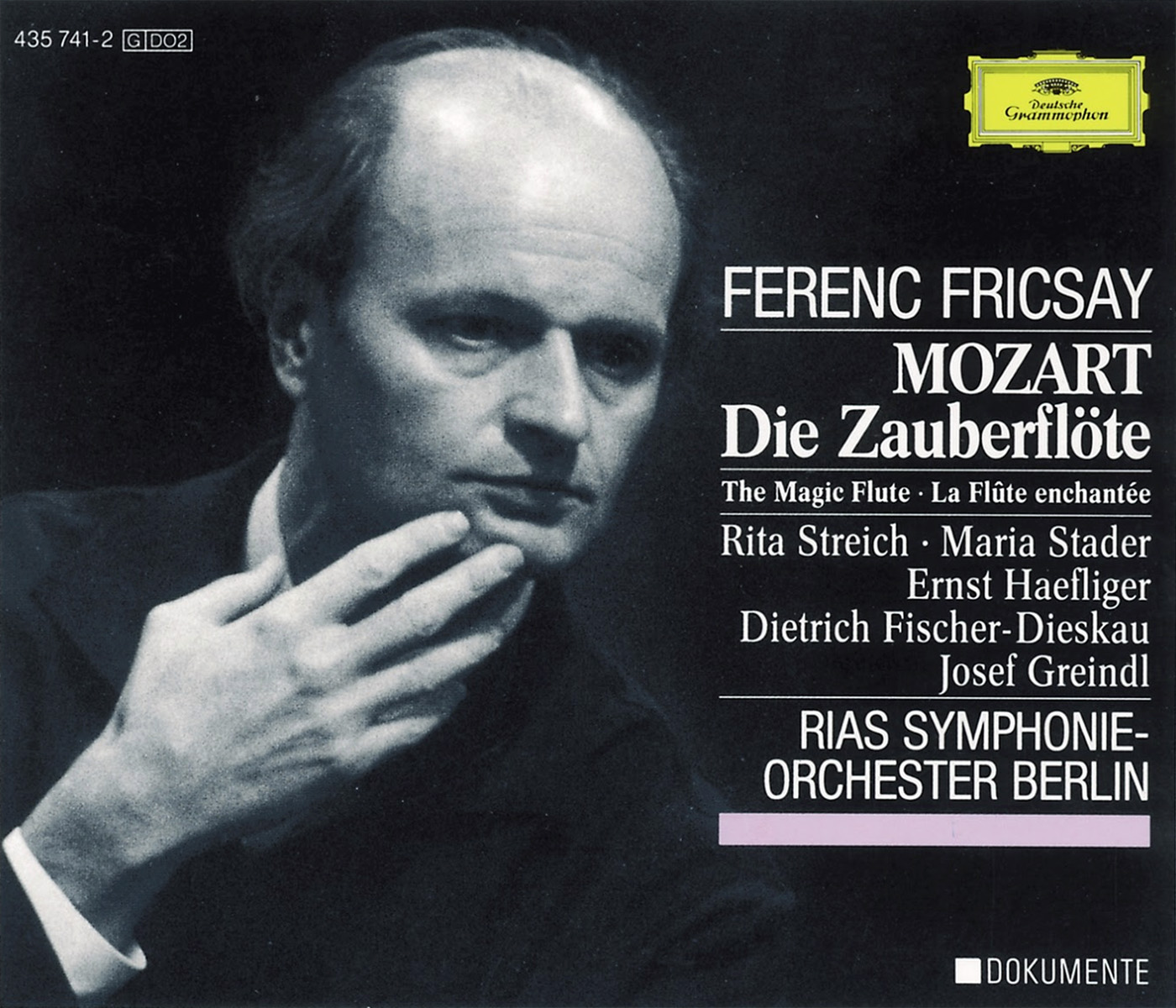
Elenco tracce

1CD
#TitoloArtistaValutazioneDurata
1Die Zauberflöte: Ouvertüre
produttore:
Wolfgang Lohse
produttore esecutivo:
Prof. Elsa Schiller (Deutsche Grammophon's head of production 1952-1965)
orchestra:
RIAS-Symphonie-Orchester Berlin (aka RIAS‐Symphonie‐Orchester, 1946–1956 / Radio‐Symphonie‐Orchester Berlin, 1956–1993) (nel 1955-06)
direttore d'orchestra:
Ferenc Fricsay (conductor) (nel 1955-06)
tecnico di bilanciamento:
Heinrich Keilholz e Alfred Steinke (nel 1955-06)
registrata presso:
Jesus‐Christus‐Kirche (Dahlem) in Berlin, Germania (nel 1955-06)
registrazione di:
Die Zauberflöte: Ouvertüre (The Magic Flute, K. 620: Overture) (nel 1955-06)
compositore:
Wolfgang Amadeus Mozart (classical composer) (nel 1791)
parte di:
Die Zauberflöte, K. 620 (The Magic Flute, K. 620)
Wolfgang Amadeus Mozart6:44
2Die Zauberflöte: Act I. Nr. 1 Introduktion: »Zu Hilfe! Zu Hilfe!« (Tamino, Die drei Damen) / »Wo bin ich?« (Tamino)
produttore:
Wolfgang Lohse
produttore esecutivo:
Prof. Elsa Schiller (Deutsche Grammophon's head of production 1952-1965)
voce di mezzosoprano [Dritte Dame der Königin]:
Margarete Klose (alto) (nel 1955-06)
voce di soprano [Erste Dame der Königin]:
Marianne Schech (soprano) (nel 1955-06)
voce di soprano [Zweite Dame der Königin]:
Liselotte Losch (soprano) (nel 1955-06)
voce di tenore [Tamino]:
Ernst Haefliger (tenor) (nel 1955-06)
voce parlata [Tamino]:
Sebastian Fischer (actor, voice actor and dubbing speaker) (nel 1955-06)
orchestra:
RIAS-Symphonie-Orchester Berlin (aka RIAS‐Symphonie‐Orchester, 1946–1956 / Radio‐Symphonie‐Orchester Berlin, 1956–1993) (nel 1955-06)
direttore d'orchestra:
Ferenc Fricsay (conductor) (nel 1955-06)
tecnico di bilanciamento:
Heinrich Keilholz e Alfred Steinke (nel 1955-06)
registrata presso:
Jesus‐Christus‐Kirche (Dahlem) in Berlin, Germania (nel 1955-06)
registrazione di:
Die Zauberflöte: Akt I. No. 1 Introduktion „Zu Hilfe! Zu Hilfe!” (Tamino, Damen) (nel 1955-06)
compositore:
Wolfgang Amadeus Mozart (classical composer) (nel 1791)
librettista:
Emanuel Johann Josef Schikaneder
parte di:
Die Zauberflöte, K. 620: Akt I
Wolfgang Amadeus Mozart6:39
3Die Zauberflöte: Act I. Nr. 2 Arie: »Der Vogelfänger bin ich ja« (Papageno) / »He da!… Was da!« (Tamino, Papageno, Die drei Damen)
produttore:
Wolfgang Lohse
produttore esecutivo:
Prof. Elsa Schiller (Deutsche Grammophon's head of production 1952-1965)
voce di baritono [Papageno]:
Dietrich Fischer‐Dieskau (baritone) (nel 1955-06)
voce parlata [Dritte Dame der Königin]:
Alice Decarli (actress and dubbing speaker) (nel 1955-06)
voce parlata [Erste Dame der Königin]:
Margot Leonard (actress, dubbing speaker and voice actor) (nel 1955-06)
voce parlata [Papageno]:
Walter Bluhm (actor and voice actor) (nel 1955-06)
voce parlata [Tamino]:
Sebastian Fischer (actor, voice actor and dubbing speaker) (nel 1955-06)
voce parlata [Zweite Dame der Königin]:
Marion Degler (actress and dubbing speaker) (nel 1955-06)
orchestra:
RIAS-Symphonie-Orchester Berlin (aka RIAS‐Symphonie‐Orchester, 1946–1956 / Radio‐Symphonie‐Orchester Berlin, 1956–1993) (nel 1955-06)
direttore d'orchestra:
Ferenc Fricsay (conductor) (nel 1955-06)
tecnico di bilanciamento:
Heinrich Keilholz e Alfred Steinke (nel 1955-06)
diritti fonografici (℗) detenuti da:
Polydor International GmbH (not for release label use!) (nel 1955)
registrata presso:
Jesus‐Christus‐Kirche (Dahlem) in Berlin, Germania (nel 1955-06)
registrazione di:
Die Zauberflöte: Akt I. No. 2 Arie „Was hör’ ich?” … „Der Vogelfänger bin ich ja” (Papageno) (nel 1955-06)
compositore:
Wolfgang Amadeus Mozart (classical composer) (nel 1791)
librettista:
Emanuel Schikaneder
parte di:
Die Zauberflöte, K. 620: Akt I
Wolfgang Amadeus Mozart5:55
4Die Zauberflöte: Act I. Nr. 3 Arie: »Dies Bildnis ist bezaubernd schön« (Tamino) / »Rüste dich mit Mut und Standhaftigkeit« (Die drei Damen, Tamino)
produttore:
Wolfgang Lohse
produttore esecutivo:
Prof. Elsa Schiller (Deutsche Grammophon's head of production 1952-1965)
voce di tenore [Tamino]:
Ernst Haefliger (tenor) (nel 1955-06)
voce parlata [Dritte Dame der Königin]:
Alice Decarli (actress and dubbing speaker) (nel 1955-06)
voce parlata [Erste Dame der Königin]:
Margot Leonard (actress, dubbing speaker and voice actor) (nel 1955-06)
voce parlata [Tamino]:
Sebastian Fischer (actor, voice actor and dubbing speaker) (nel 1955-06)
voce parlata [Zweite Dame der Königin]:
Marion Degler (actress and dubbing speaker) (nel 1955-06)
orchestra:
RIAS-Symphonie-Orchester Berlin (aka RIAS‐Symphonie‐Orchester, 1946–1956 / Radio‐Symphonie‐Orchester Berlin, 1956–1993) (nel 1955-06)
direttore d'orchestra:
Ferenc Fricsay (conductor) (nel 1955-06)
tecnico di bilanciamento:
Heinrich Keilholz e Alfred Steinke (nel 1955-06)
registrata presso:
Jesus‐Christus‐Kirche (Dahlem) in Berlin, Germania (nel 1955-06)
registrazione di:
Die Zauberflöte: Akt I. No. 3 Arie „Dies Bildnis ist bezaubernd schön“ (Tamino) (nel 1955-06)
compositore:
Wolfgang Amadeus Mozart (classical composer) (nel 1791)
librettista:
Emanuel Schikaneder
parte di:
Die Zauberflöte, K. 620: Akt I
Wolfgang Amadeus Mozart4:42
5Die Zauberflöte: Act I. Nr. 4 Rezitativ und Arie: »O zittre nicht, mein lieber Sohn!« (Königin der Nacht) / »Ist’s denn Wirklichkeit, was ich sah?« (Tamino)
produttore:
Wolfgang Lohse
produttore esecutivo:
Prof. Elsa Schiller (Deutsche Grammophon's head of production 1952-1965)
voce di soprano [Königin der Nacht]:
Rita Streich (soprano) (nel 1955-06)
voce parlata [Tamino]:
Sebastian Fischer (actor, voice actor and dubbing speaker) (nel 1955-06)
orchestra:
RIAS-Symphonie-Orchester Berlin (aka RIAS‐Symphonie‐Orchester, 1946–1956 / Radio‐Symphonie‐Orchester Berlin, 1956–1993) (nel 1955-06)
direttore d'orchestra:
Ferenc Fricsay (conductor) (nel 1955-06)
tecnico di bilanciamento:
Heinrich Keilholz e Alfred Steinke (nel 1955-06)
registrata presso:
Jesus‐Christus‐Kirche (Dahlem) in Berlin, Germania (nel 1955-06)
registrazione di:
Die Zauberflöte: Akt I. No. 4 Rezitativ und Arie „O zittre nicht, mein lieber Sohn” ... „Zum Leiden bin ich auserkoren” (Die Königin der Nacht) (nel 1955-06)
compositore:
Wolfgang Amadeus Mozart (classical composer) (nel 1791)
librettista:
Emanuel Schikaneder
parte di:
Die Zauberflöte, K. 620: Akt I
Wolfgang Amadeus Mozart5:01
6Die Zauberflöte: Act I. Nr. 5 Quintett: »Hm, hm, hm« (Papageno, Tamino, Die drei Damen) / »Wir haben die geflohene Pamina wieder erwischt!« (Sklave)
produttore:
Wolfgang Lohse
produttore esecutivo:
Prof. Elsa Schiller (Deutsche Grammophon's head of production 1952-1965)
voce di baritono [Papageno]:
Dietrich Fischer‐Dieskau (baritone) (nel 1955-06)
voce di mezzosoprano [Dritte Dame der Königin]:
Margarete Klose (alto) (nel 1955-06)
voce di soprano [Erste Dame der Königin]:
Marianne Schech (soprano) (nel 1955-06)
voce di soprano [Zweite Dame der Königin]:
Liselotte Losch (soprano) (nel 1955-06)
voce di tenore [Tamino]:
Ernst Haefliger (tenor) (nel 1955-06)
orchestra:
RIAS-Symphonie-Orchester Berlin (aka RIAS‐Symphonie‐Orchester, 1946–1956 / Radio‐Symphonie‐Orchester Berlin, 1956–1993) (nel 1955-06)
direttore d'orchestra:
Ferenc Fricsay (conductor) (nel 1955-06)
tecnico di bilanciamento:
Heinrich Keilholz e Alfred Steinke (nel 1955-06)
registrata presso:
Jesus‐Christus‐Kirche (Dahlem) in Berlin, Germania (nel 1955-06)
registrazione di:
Die Zauberflöte: Akt I. No. 5 Quintet „Hm! hm! hm! hm!” … „Drei Knaben, jung, schön, hold und weise” (Papageno, Tamino, Drei Damen) (nel 1955-06)
compositore:
Wolfgang Amadeus Mozart (classical composer) (nel 1791)
librettista:
Emanuel Schikaneder
parte di:
Die Zauberflöte, K. 620: Akt I
Wolfgang Amadeus Mozart6:09
7Die Zauberflöte: Act I. Nr. 6 Terzett: »Du feines Täubchen, nur herein!« (Monostatos, Pamina, Papageno) / »Bin ich nicht ein Narr« (Papageno, Pamina)
produttore:
Wolfgang Lohse
produttore esecutivo:
Prof. Elsa Schiller (Deutsche Grammophon's head of production 1952-1965)
voce di baritono [Papageno]:
Dietrich Fischer‐Dieskau (baritone) (nel 1955-06)
voce di soprano [Pamina]:
Maria Stader (soprano) (nel 1955-06)
voce di tenore [Monostatos]:
Martin Vantin (tenor) (nel 1955-06)
orchestra:
RIAS-Symphonie-Orchester Berlin (aka RIAS‐Symphonie‐Orchester, 1946–1956 / Radio‐Symphonie‐Orchester Berlin, 1956–1993) (nel 1955-06)
direttore d'orchestra:
Ferenc Fricsay (conductor) (nel 1955-06)
tecnico di bilanciamento:
Heinrich Keilholz e Alfred Steinke (nel 1955-06)
registrata presso:
Jesus‐Christus‐Kirche (Dahlem) in Berlin, Germania (nel 1955-06)
registrazione di:
Die Zauberflöte: Akt I. No. 6 Terzett „Du feines Täubchen, nur herein!” (Monostatos, Pamina, Papageno) (nel 1955-06)
compositore:
Wolfgang Amadeus Mozart (classical composer) (nel 1791)
librettista:
Emanuel Schikaneder
parte di:
Die Zauberflöte, K. 620: Akt I
Wolfgang Amadeus Mozart3:04
8Die Zauberflöte: Act I. Nr. 7 Duett: »Bei Männern, welche Liebe fühlen« (Pamina, Papageno) / »Komm, Tamino!« (Erster Knabe, Tamino)
produttore:
Wolfgang Lohse
produttore esecutivo:
Prof. Elsa Schiller (Deutsche Grammophon's head of production 1952-1965)
voce di baritono [Papageno]:
Dietrich Fischer‐Dieskau (baritone) (nel 1955-06)
voce di soprano [Pamina]:
Maria Stader (soprano) (nel 1955-06)
voce di tenore [Tamino]:
Ernst Haefliger (tenor) (nel 1955-06)
voce parlata [Erster Knabe]:
Margot Guilleaume (German soprano) (nel 1955-06)
voce parlata [Tamino]:
Sebastian Fischer (actor, voice actor and dubbing speaker) (nel 1955-06)
orchestra:
RIAS Symphonie‐Orchester Berlin (aka RIAS‐Symphonie‐Orchester, 1946–1956 / Radio‐Symphonie‐Orchester Berlin, 1956–1993) (nel 1955-06)
direttore d'orchestra:
Ferenc Fricsay (conductor) (nel 1955-06)
tecnico di bilanciamento:
Heinrich Keilholz e Alfred Steinke (nel 1955-06)
registrata presso:
Jesus‐Christus‐Kirche (Dahlem) in Berlin, Germania (nel 1955-06)
registrazione di:
Die Zauberflöte: Akt I. No. 7 Duett „Bei Männern, welche Liebe fühlen” (Pamina, Papageno) (nel 1955-06)
compositore:
Wolfgang Amadeus Mozart (classical composer) (nel 1791)
librettista:
Emanuel Schikaneder
parte di:
Die Zauberflöte, K. 620: Akt I
Wolfgang Amadeus Mozart2:31
9Die Zauberflöte: Act I. Nr. 8 Finale: »Zum Ziele führt dich diese Bahn« (Die drei Knaben, Tamino, Priester, Sprecher, Chor)
produttore:
Wolfgang Lohse
produttore esecutivo:
Prof. Elsa Schiller (Deutsche Grammophon's head of production 1952-1965)
cori:
Berliner Motettenchor (nel 1955-06) e RIAS-Kammerchor (German chamber choir) (nel 1955-06)
voce di mezzosoprano [Dritter Knabe]:
Diana Eustrati (mezzo-soprano) (nel 1955-06)
voce di soprano [Erster Knabe]:
Margot Guilleaume (German soprano) (nel 1955-06)
voce di soprano [Zweiter Knabe]:
Maria Reith (soprano) (nel 1955-06)
voce di tenore [Erster Priester]:
Wilhelm Borchert (actor and dubbing speaker) (nel 1955-06)
voce di tenore [Tamino]:
Ernst Haefliger (tenor) (nel 1955-06)
voce di tenore [Zweiter Priester]:
Howard Vandenburg (tenor) (nel 1955-06)
voce parlata [Dritter Priester]:
Siegmar Schneider (actor, voice actor and dubbing speaker) (nel 1955-06)
orchestra:
RIAS-Symphonie-Orchester Berlin (aka RIAS‐Symphonie‐Orchester, 1946–1956 / Radio‐Symphonie‐Orchester Berlin, 1956–1993) (nel 1955-06)
direttore d'orchestra:
Ferenc Fricsay (conductor) (nel 1955-06)
maestro del coro:
Günther Arndt (choral conductor) (nel 1955-06)
tecnico di bilanciamento:
Heinrich Keilholz e Alfred Steinke (nel 1955-06)
registrata presso:
Jesus‐Christus‐Kirche (Dahlem) in Berlin, Germania (nel 1955-06)
registrazione di:
Die Zauberflöte: Akt I. No. 8 Finale „Zum Ziele führt dich diese Bahn” (Knaben, Tamino, Stimmen, Sprecher) (nel 1955-06)
compositore:
Wolfgang Amadeus Mozart (classical composer) (nel 1791)
librettista:
Emanuel Schikaneder
parte di:
Die Zauberflöte, K. 620: Akt I
Wolfgang Amadeus Mozart10:14
10Die Zauberflöte: Act I. Nr. 8 Finale: »Wie stark ist nicht dein Zauberton« (Tamino, Papageno)
produttore:
Wolfgang Lohse
produttore esecutivo:
Prof. Elsa Schiller (Deutsche Grammophon's head of production 1952-1965)
voce di baritono [Papageno]:
Dietrich Fischer‐Dieskau (baritone) (nel 1955-06)
voce di tenore [Tamino]:
Ernst Haefliger (tenor) (nel 1955-06)
orchestra:
RIAS-Symphonie-Orchester Berlin (aka RIAS‐Symphonie‐Orchester, 1946–1956 / Radio‐Symphonie‐Orchester Berlin, 1956–1993) (nel 1955-06)
direttore d'orchestra:
Ferenc Fricsay (conductor) (nel 1955-06)
tecnico di bilanciamento:
Heinrich Keilholz e Alfred Steinke (nel 1955-06)
registrata presso:
Jesus‐Christus‐Kirche (Dahlem) in Berlin, Germania (nel 1955-06)
registrazione di:
Die Zauberflöte: Akt I. Andante „Wie stark ist nicht dein Zauberton” (Tamino) (nel 1955-06)
compositore:
Wolfgang Amadeus Mozart (classical composer) (nel 1791)
librettista:
Emanuel Schikaneder
parte di:
Die Zauberflöte, K. 620: Akt I
Wolfgang Amadeus Mozart3:14
11Die Zauberflöte: Act I. Nr. 8 Finale: »Schnelle Füsse, rascher Mut« (Pamina, Papageno, Monostatos, Chor)
produttore:
Wolfgang Lohse
produttore esecutivo:
Prof. Elsa Schiller (Deutsche Grammophon's head of production 1952-1965)
cori:
Berliner Motettenchor (nel 1955-06) e RIAS-Kammerchor (German chamber choir) (nel 1955-06)
voce di baritono [Papageno]:
Dietrich Fischer‐Dieskau (baritone) (nel 1955-06)
voce di soprano [Pamina]:
Maria Stader (soprano) (nel 1955-06)
voce di tenore [Monostatos]:
Martin Vantin (tenor) (nel 1955-06)
orchestra:
RIAS-Symphonie-Orchester Berlin (aka RIAS‐Symphonie‐Orchester, 1946–1956 / Radio‐Symphonie‐Orchester Berlin, 1956–1993) (nel 1955-06)
direttore d'orchestra:
Ferenc Fricsay (conductor) (nel 1955-06)
maestro del coro:
Günther Arndt (choral conductor) (nel 1955-06)
tecnico di bilanciamento:
Heinrich Keilholz e Alfred Steinke (nel 1955-06)
registrata presso:
Jesus‐Christus‐Kirche (Dahlem) in Berlin, Germania (nel 1955-06)
registrazione di:
Die Zauberflöte: Akt I. "Schnelle Füsse, rascher Mut … Nur geschwinde, nur geschwinde … Wer viel wagt, gewinnt oft viel! … Das klinget so herrlich … Könnte jeder brave Mann" (Pamina, Papageno, Monostatos, Sklaven) (nel 1955-06)
compositore:
Wolfgang Amadeus Mozart (classical composer) (nel 1791)
librettista:
Emanuel Schikaneder
parte di:
Die Zauberflöte, K. 620: Akt I
Wolfgang Amadeus Mozart3:56
12Die Zauberflöte: Act I. Nr. 8 Finale: »Es lebe Sarastro, Sarastro soll leben!« (Chor, Papageno, Pamina, Sarastro, Monostatos, Tamino)
produttore:
Wolfgang Lohse
produttore esecutivo:
Prof. Elsa Schiller (Deutsche Grammophon's head of production 1952-1965)
cori:
Berliner Motettenchor (nel 1955-06) e RIAS-Kammerchor (German chamber choir) (nel 1955-06)
voce di baritono [Papageno]:
Dietrich Fischer‐Dieskau (baritone) (nel 1955-06)
voce di basso [Sarastro]:
Josef Greindl (operatic bass) (nel 1955-06)
voce di soprano [Pamina]:
Maria Stader (soprano) (nel 1955-06)
voce di tenore [Monostatos]:
Martin Vantin (tenor) (nel 1955-06)
voce di tenore [Tamino]:
Ernst Haefliger (tenor) (nel 1955-06)
orchestra:
RIAS-Symphonie-Orchester Berlin (aka RIAS‐Symphonie‐Orchester, 1946–1956 / Radio‐Symphonie‐Orchester Berlin, 1956–1993) (nel 1955-06)
direttore d'orchestra:
Ferenc Fricsay (conductor) (nel 1955-06)
maestro del coro:
Günther Arndt (choral conductor) (nel 1955-06)
tecnico di bilanciamento:
Heinrich Keilholz e Alfred Steinke (nel 1955-06)
registrata presso:
Jesus‐Christus‐Kirche (Dahlem) in Berlin, Germania (nel 1955-06)
registrazione di:
Die Zauberflöte: Akt I. Allegro maestoso „Es lebe Sarastro!” (Gefolge, Pamina, Papageno) (nel 1955-06)
compositore:
Wolfgang Amadeus Mozart (classical composer) (nel 1791)
librettista:
Emanuel Schikaneder
parte di:
Die Zauberflöte, K. 620: Akt I
Wolfgang Amadeus Mozart7:07
2CD

Accreditamenti

Pubblicazione

parte di:Dokumente (Deutsche Grammophon) (ordine: 7)
ASIN:UK: B000001GGF [info]